THE POWER OF STARTING EARLY
Two savings strategies. One surprising result.
Jill and Jack took different approaches to saving for retirement. Jill started early but stopped contributing after 15 years. Jack started later and continued saving for 33 years. Both retired at age 70. Who finished with more?
Jill
Saved earlier for less time
15 years of active saving
Started saving when she began teaching. Contributed $3,000 annually for 15 years, then stopped and allowed her savings to continue growing.
Jack
saved later for longer
33 years of active saving
Waited until age 37 to begin saving. Contributed $3,000 annually for 33 years until retirement.
Who had more savings at retirement?
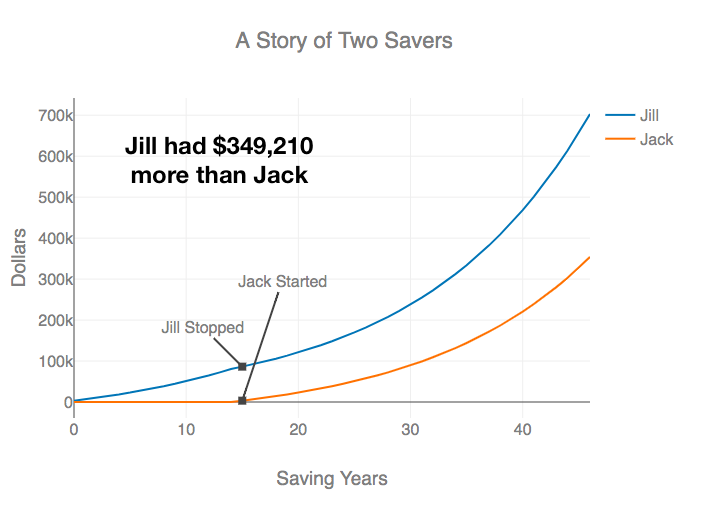
*This chart is to demonstrate the effects of compound interest. This is not a prediction of any individuals investment performance.
** This graph assumes a fixed 7% interest rate with annual investments of $3,000 throughout their savings timeframe.